
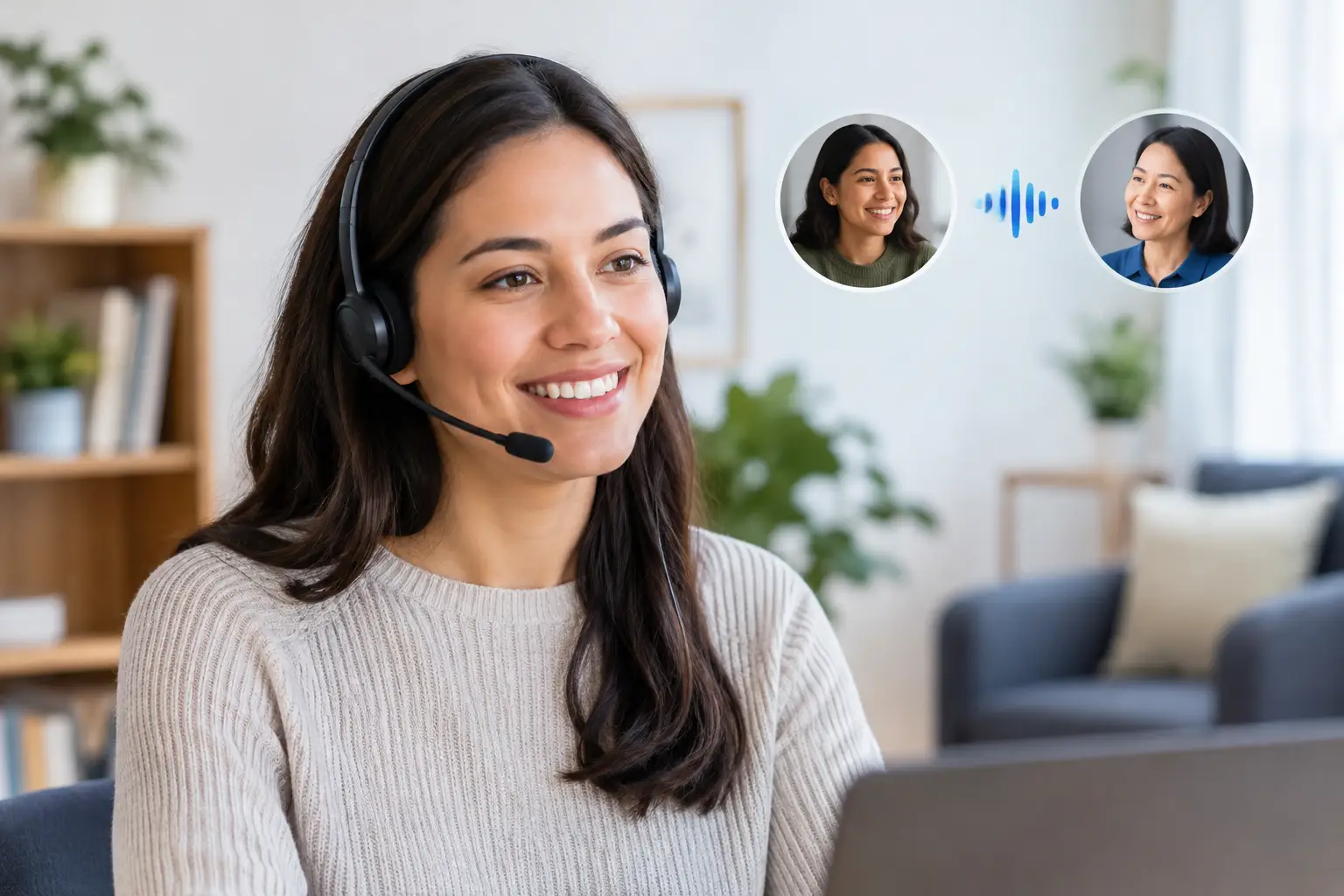
A referral call that goes unanswered at 5:40 p.m. is rarely just a missed phone call. It may be a parent trying to schedule an ADHD evaluation, an adult seeking a neuropsychological assessment, or a Spanish-speaking family deciding whether your practice feels accessible. For assessment-focused practices, a bilingual AI receptionist for therapy can turn that moment into a documented, routed, and appropriately handled intake opportunity without asking clinicians or front-desk staff to stay tethered to the phone.
The value is not simply answering more calls. It is creating a reliable first-contact workflow that respects language access, protects sensitive information, and reflects the way psychology practices actually operate. A general-purpose answering service may book a generic appointment. A purpose-built voice workflow can collect the details that determine whether the referral is clinically and operationally appropriate.
Why bilingual access changes the referral workflow
Language access is often treated as a website translation problem. For therapy and assessment practices, it is an operational issue that begins before a prospective client completes a form. If a caller cannot explain their concern, understand next steps, or confirm basic availability in their preferred language, the referral process has already introduced friction.
That friction is especially costly in practices that manage comprehensive evaluations. A request may involve a child with school concerns, a caregiver with complex scheduling needs, an adult pursuing diagnostic clarification, or a Vocational Rehabilitation referral requiring an authorization and case ID. The first conversation does not need to conduct a clinical interview, but it does need to capture enough context for staff to respond intelligently.
A bilingual voice agent can greet callers in English or Spanish, identify the reason for contact, capture callback details, and guide the caller toward the appropriate next step. When configured well, it avoids pretending to be a clinician. It does not diagnose, provide treatment advice, interpret test results, or handle an emergency as if it were routine scheduling.
For many practices, that distinction is the difference between useful automation and unacceptable risk.
What a bilingual AI receptionist for therapy should handle
The right scope depends on your services, staffing model, and referral volume. Still, the strongest workflows usually focus on repetitive, rules-based front-office work that otherwise creates delays and interruptions.
A bilingual AI receptionist for therapy can answer common first-contact questions, collect basic referral information, identify the requested service, offer available scheduling paths, and send a secure follow-up prompt when a caller needs to complete intake materials. It can also recognize when the caller should be routed to a staff member rather than pushed through an automated path.
For an assessment practice, intake fields should reflect the actual referral process. “Would you like therapy?” is not enough when the practice provides psychoeducational evaluations, autism assessments, neuropsychological testing, fitness-for-duty evaluations, or agency-funded services. The agent should be able to distinguish service categories and gather relevant administrative details without overcollecting protected health information by voice.
Referral capture that supports clinical review
A useful first-call workflow may collect the caller’s name, preferred language, callback number, general reason for referral, age range, referral source, insurance or self-pay preference, and scheduling constraints. If the practice works with VR referrals or other state agencies, it may also ask whether the caller has a case manager, authorization, or case ID.
The goal is not to replace the intake coordinator’s judgment. It is to give that coordinator a complete starting point inside the same workflow where they can review eligibility, clinician fit, scheduling needs, and required documentation.
That matters when families have co-parent access needs, when a referral requires school records, or when a funder has specific authorization rules. A disconnected voicemail transcription creates another task. A structured referral record can move directly into the practice’s operational process.
Scheduling without false certainty
Scheduling is where many voice tools overpromise. A calendar opening is not always an appointment a caller should be allowed to book. Assessment appointments can require specific clinicians, testing rooms, interpreter coordination, referral approval, deposit rules, or a sequence of visits.
A well-designed agent follows scheduling guardrails. It can offer only approved appointment types, confirm basic eligibility steps, and hold or request an appointment rather than confirming a slot when staff review is needed. It can also send reminders in the caller’s chosen language and reduce the back-and-forth that leads to unfilled calendars.
For a small therapy practice with simple appointment types, direct booking may be appropriate. For a neuropsychology group with complex battery administration and report deadlines, a referral-request workflow may be safer. The technology should adapt to the workflow, not force the practice into a generic medical-office template.
Privacy, escalation, and human control are not optional
A voice agent becomes part of the practice’s communications infrastructure. That means privacy cannot be treated as a feature added after deployment. Practices should understand where call data is stored, who can access it, how long it is retained, whether the vendor will sign a BAA, and whether patient data is excluded from AI model training.
HIPAA-ready architecture, encryption, role-based access, audit logging, and signed BAAs are practical requirements for a system handling prospective patient communications. The workflow itself should also be designed for minimum necessary collection. A caller can state that they are seeking an evaluation without being prompted to describe every symptom or traumatic event to an automated system.
Escalation protocols deserve the same care. The agent should clearly state that it is not an emergency service and provide the practice-approved direction when a caller indicates immediate danger or urgent needs. It should also transfer or flag calls involving clinical questions, medication concerns, existing-client crises, complaints, or situations that require staff discretion.
Automation is most dependable when its boundaries are explicit. Clinicians and practice managers should be able to review call outcomes, revise scripts, set routing rules, and see where referrals are being lost. Human oversight is not a fallback. It is the operating model.
The advantage of a connected clinical workflow
A standalone answering tool can reduce missed calls, but it often creates a second system for staff to monitor. Notes must be copied into a CRM, appointment requests reconciled with the calendar, and intake information sent again through separate forms. The administrative burden has merely moved.
A connected platform gives the receptionist context and gives staff continuity. A captured referral can become a CRM record, trigger a secure intake workflow, support scheduling, and remain visible through documentation, billing support, report delivery, and follow-up. For agency-funded cases, the same record can retain authorization details and case requirements rather than scattering them across email, spreadsheets, and voicemail.
PsyenceFlow is designed around this kind of connected practice infrastructure, including a bilingual Voice AI Agent alongside referral intake, scheduling, secure communication, and assessment workflows. For clinicians who build test batteries, manage mixed-metric norm handling, and produce detailed reports, that connection matters. The front door of the practice should not be disconnected from the clinical work that follows.
How to implement the voice workflow without creating new problems
Start with a narrow, high-volume use case. After-hours calls, new referral inquiries, and appointment confirmation requests are often better first targets than every possible call type. Review several weeks of real call reasons before writing scripts. The patterns will show which questions are predictable and which situations require a person.
Build the English and Spanish experiences separately rather than translating word for word. The language should sound natural, use plain terms, and reflect how your staff actually explains services. Have bilingual staff or qualified reviewers test the scripts for clarity, tone, and accuracy.
Then define the handoff rules. Identify which callers can receive scheduling options, which need a secure intake form, which require an administrative review, and which must be directed to a human immediately. Test edge cases such as a caregiver calling on behalf of an adult client, a referral source requesting status, or a family asking about an evaluation not offered by the practice.
Finally, measure the workflow by operational outcomes: referral response time, completed intake rate, no-show rate, staff call volume, and the percentage of callers who reach the appropriate next step. More answered calls only matter if they lead to better access and less clerical work.
A bilingual receptionist should make the first interaction feel more organized, not more automated. When it captures the right information, speaks to callers in the language they prefer, and places clinicians in control of the exceptions, it gives your practice more room for the work only your team can do.